



High-Performance Environmentally Friendly Alumina Soluble Fiber Blanket
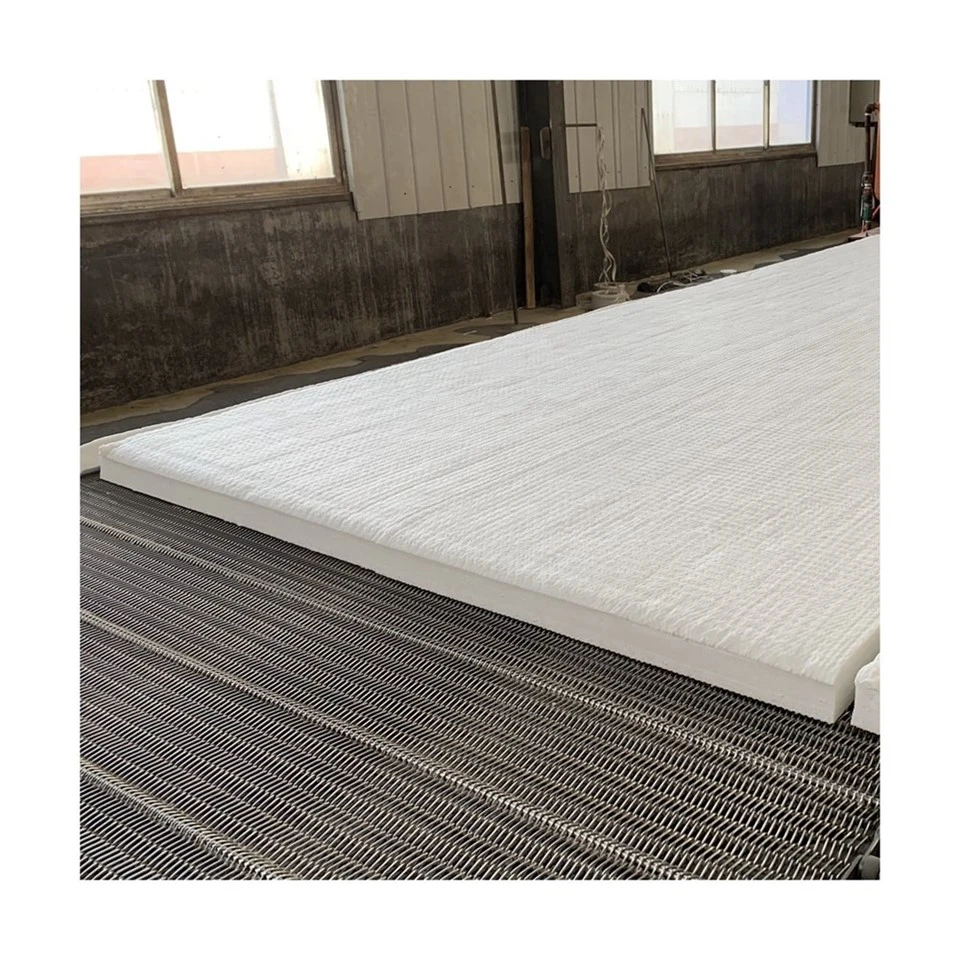
High-Performance Environmentally Friendly Alumina Soluble Fiber Blanket suppliers

High-Performance Environmentally Friendly Alumina Soluble Fiber Blanket factory

High-Performance Environmentally Friendly Alumina Soluble Fiber Blanket best

High-Performance Environmentally Friendly Alumina Soluble Fiber Blanket high quality
High-Performance Environmentally Friendly Alumina Soluble Fiber Blanket
The high-performance environmentally friendly alumina soluble fiber blanket is a novel refractory and thermal insulation material produced from high-purity inorganic compounds such as alumina and aluminum silicate through high-temperature melting, fiber spinning, and layered felting processes. This product combines excellent high-temperature stability with environmentally friendly degradability, maintaining structural and performance integrity in harsh high-temperature environments while gradually dissolving under specific conditions to achieve environmental friendliness. It is now widely used for insulation and thermal protection in high-temperature equipment across industries such as metallurgy, chemicals, power generation, and aerospace.
Product Features and Advantages
Exceptional High-Temperature Resistance
The product can be used continuously at temperatures up to 1260°C and withstand short-term exposure to 1350°C, making it suitable for various complex high-temperature industrial applications.
Environmentally Friendly and Soluble
The fibers can slowly dissolve in bodily fluids or natural water environments, effectively reducing the risk of inhalation by humans. Compliant with international environmental and occupational health standards, it represents a new generation of green and safe refractory materials.
Excellent Thermal Insulation and Energy Efficiency
With an extremely low thermal conductivity, it significantly blocks heat transfer, reduces thermal energy loss, and enhances equipment energy efficiency.
High Strength, Flexibility, and Ease of Installation
The uniform fiber structure, lightweight and soft texture, and excellent tensile and compressive strength make it easy to cut, bend, and install, adapting well to complex-shaped surfaces.
Outstanding Chemical Corrosion Resistance
It exhibits strong chemical stability against various acidic and alkaline media, making it suitable for corrosive atmospheres in chemical and metallurgical industries.
Low Heat Capacity and Rapid Thermal Response
With minimal heat capacity, it responds quickly to heating and cooling cycles, making it ideal for intermittent operations and delivering significant energy-saving benefits.
Safe, Harmless, and Certified
The product contains no hazardous substances such as asbestos or heavy metals, is non-radioactive, and complies with environmental directives such as EU RoHS and REACH, ensuring safety and reliability.
Technical Parameters
|
ITEM |
1100 BLANKET |
1300 BLANKET |
|||
|
Physical Index |
Classification Temperature(C°) |
1100 |
1300 |
||
|
Bulk Density (kg/m3) |
96 |
128 |
96 |
128 |
|
|
Heating line shrinkage (%) |
1000℃x24h≤1.5 |
1000℃x24h≤4 |
|||
|
Shot Content (%) |
≤12 |
≤12 |
|||
|
Tensile strength (thickness25mm) (MPA) |
≥0.045 |
=0.060 |
=0.050 |
=0.060 |
|
|
Fiber length (μm) |
3-5 |
3-5 |
|||
|
Chemical Component |
Si2O2 |
55-66 |
70-80 |
||
|
Cao |
23-35 |
18-25 |
|||
|
MgO |
4-7 |
00-4 |
|||
|
Thermal Conductivity |
200℃ |
0.065 |
0.049 |
- |
- |
|
400℃ |
0.098 |
0.087 |
0.11 |
0.10 |
|
|
600℃ |
0.212 |
0.191 |
0.21 |
0.20 |
|
|
Size(mm) |
Length:3600&7200&14640 Width:610&1220 Thickness:6-60 As customers' requirements |
||||
Introduction to Manufacturing Process
Raw Material Selection
High-purity alumina and aluminum silicate serve as the primary raw materials. The chemical composition is strictly controlled to ensure stable performance and consistency of the final products.
Melt Spinning
Raw materials are melted in high-temperature furnaces and then formed into continuous, fine inorganic ceramic fibers using high-speed blowing or centrifugal spinning techniques.
Blanket Forming Process
The fibers are uniformly laid into a web and laminated through wet or dry processes to create a continuous, structurally uniform, and soft-textured blanket.
Heat Treatment and Setting
The formed blanket undergoes high-temperature heat treatment and crystallization, significantly enhancing the fiber's thermal stability, structural strength, and creep resistance.
Surface Functional Treatment (Optional)
Depending on application requirements, surface composite treatments can be applied to provide additional functionalities such as waterproofing, abrasion resistance, enhanced flame retardancy, or corrosion resistance.
Quality Inspection and Packaging
Each batch of products undergoes rigorous physical performance and visual inspections. They are packaged according to standardized specifications to ensure intact transportation and storage.
Main Application Areas
Metallurgical Industry
Used for lining and insulation in high-temperature equipment such as blast furnaces, ladles, and heat treatment furnaces to improve thermal efficiency, stabilize furnace temperature, and reduce energy consumption.
Petrochemical Industry
Suitable for corrosion resistance and insulation in equipment like reactors, cracking furnaces, and high-temperature pipelines, ensuring long-lasting performance in acidic or alkaline corrosive environments.
Power Industry
Widely used for thermal insulation in boiler systems, heat exchange equipment, and steam pipelines, ensuring operational safety and energy efficiency.
Aerospace Industry
Applied to critical components such as engine thermal shields and nozzle thermal protection, meeting requirements for extreme high-temperature resistance and lightweight design.
High-Temperature Heat Treatment Equipment
Used as linings for heat treatment furnaces, sintering furnaces, and similar equipment, adapting to frequent start-stop operations with significant energy-saving effects.
Other Specialized Fields
Covers diverse applications, including insulation for environmental protection equipment, high-temperature sealing materials, and industrial linings.
Analysis of Core Product Advantages
Environmentally Soluble, Safe, and Healthy
Compared to traditional ceramic fibers, this product features water solubility and biodegradability, significantly reducing long-term respiratory hazards from fiber dust. It complies with occupational health and environmental regulations and belongs to the category of green new materials.
Stable and Durable High-Temperature Performance
Maintains structural integrity after multiple thermal cycles without powdering or detachment. It offers stable long-term performance, extends maintenance cycles, and reduces overall operating costs.
Flexible Customization and Expandable Functionality
Supports customization of parameters such as thickness, density, and dimensions, along with various surface treatments, to adapt to different industrial environments and functional needs, enhancing product applicability and added value.
Easy Installation, Cost-Effective, and Efficient
The material is soft and easy to cut, with simple installation processes. It supports wrapping around complex shapes, significantly shortening construction time and saving installation and labor costs.
Construction and Usage Guidelines
To ensure optimal product performance and safety during construction and use, please strictly adhere to the following guidelines:
1. Construction and Installation Phase
Personnel Protection
Workers must wear compliant protective masks, safety goggles, dust-proof clothing, and gloves throughout construction to avoid skin contact and inhalation of fibers.
Ensure adequate ventilation in the working area.
Material Pre-Treatment
Check materials for moisture or damage before installation.
If cutting is required, use dedicated tools in well-ventilated areas to minimize dust generation.
Installation Requirements
Ensure blankets are tightly fitted during laying, with staggered seams to prevent thermal bridging.
Use high-temperature-resistant anchors or adhesives for fixation to avoid mechanical damage to the material structure.
For multi-layer installation, stagger the seams between layers and ensure each layer is compacted without gaps.
Environmental Conditions
Avoid construction in rainy, snowy, or highly humid environments. If necessary, implement moisture-proof measures and complete the outer protective layer promptly.
2. Operation and Maintenance Phase
Temperature Control
Do not exceed the product's rated long-term service temperature (1260°C). The short-term peak temperature must not exceed 1350°C.
Avoid Mechanical Damage
Prevent impacts from hard objects or severe vibrations during operation.
Regularly inspect the surface for integrity and promptly repair or replace any damaged areas.
Moisture and Corrosion Prevention
Although the product offers some corrosion resistance, avoid prolonged exposure to strong acids, strong alkalis, or continuous moisture erosion.
In humid environments, it is recommended to add a moisture-proof protective layer.
Regular Inspection and Maintenance
Conduct visual and structural inspections every 6-12 months, focusing on seams, anchor points, and surface conditions to ensure the insulation system remains intact and effective.
3. Disposal
Collect removed materials in dedicated containers to prevent dust dispersion.
Dispose of them as general inorganic waste according to local environmental regulations, or contact the supplier for recycling guidance.
4. Special Notes
Although the product is soluble, fine fiber dust may still be generated in its dry state. Always implement respiratory and skin protection measures.
If used in equipment related to the food or pharmaceutical industries, ensure thorough system cleaning and inspection after installation to meet hygiene standards.
FAQ
Q1: What is the temperature resistance of the product?
A1: The product's long-term stable service temperature is 1260°C, with short-term tolerance up to 1350°C, meeting the insulation needs of most industrial high-temperature equipment.
Q2: How is the product environmentally friendly?
A2: The product is made from bio-soluble fibers, which gradually dissolve in natural water environments or bodily fluids, effectively reducing the long-term respiratory hazards of fiber dust. It contains no harmful substances such as asbestos or heavy metals and complies with international environmental safety standards like RoHS and REACH.
Q3: How to choose the appropriate product density?
A3: Select based on actual working conditions:
For lower temperatures and lighter loads, lower-density models are suitable.
For high temperatures, frequent vibrations, or higher mechanical loads, higher-density models are recommended for better structural stability and durability.
Q4: What precautions should be taken during installation?
A4: Ensure a dry environment during construction, and workers must wear protective masks, gloves, and other gear. Keep blankets flat and tightly fitted during installation, and use overlapping seams or dedicated sealing materials to avoid thermal bridging. High-temperature-resistant anchors are recommended for fixation.
Q5: Which equipment is the product primarily suitable for?
A5: It is widely applicable in metallurgical industrial furnaces, petrochemical reaction equipment, power boiler systems, high-temperature process pipelines, heat treatment equipment, and aerospace engine thermal protection systems, among other fields.
Q6: Does the product's performance degrade in humid environments?
A6: The product has some moisture resistance, but prolonged exposure to high humidity or direct contact with moisture may affect its insulation performance. In such environments, adding a moisture-proof layer or selecting models with waterproof surface treatment is recommended.
Q7: What is the typical service life of the product?
A7: Under proper installation and normal operating conditions, the product's service life is generally 3-5 years. Actual lifespan depends on factors such as operating temperature, mechanical stress, environmental corrosiveness, and maintenance practices. Regular inspections and timely replacement of damaged sections are recommended.
Hot Tags: high-performance environmentally friendly alumina soluble fiber blanket, China high-performance environmentally friendly alumina soluble fiber blanket manufacturers, factory
You Might Also Like
Send Inquiry