



High-Temperature Rigid Ceramic Fiber Board
Product Overview
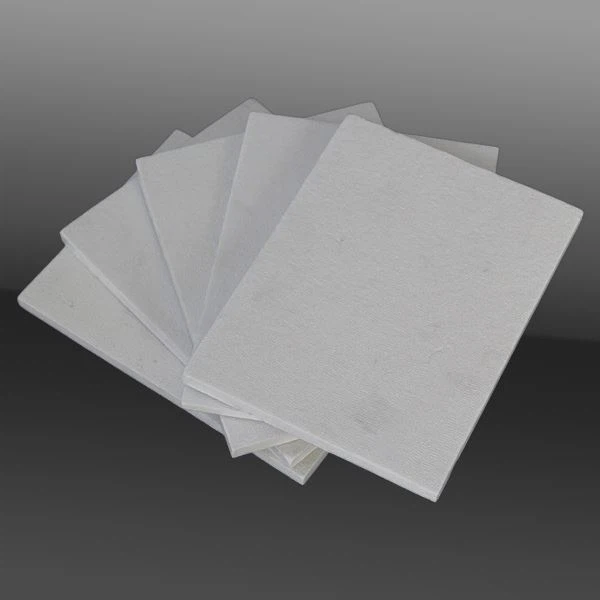
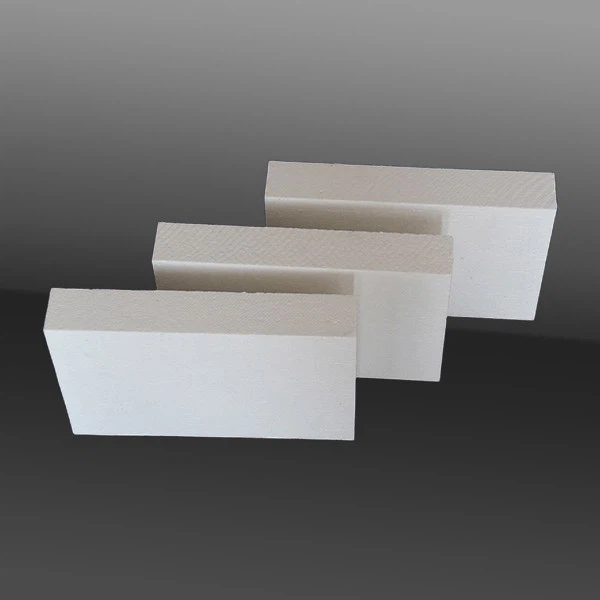
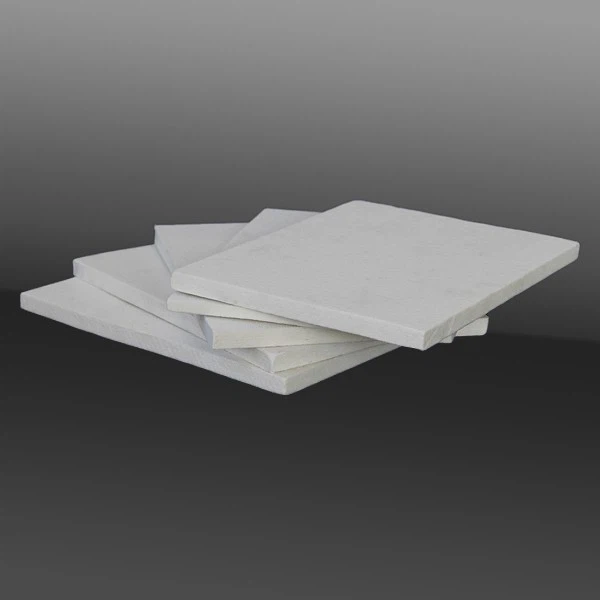
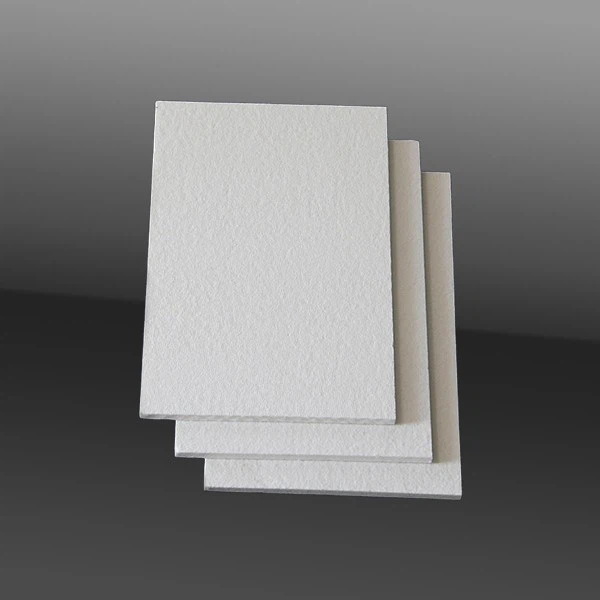
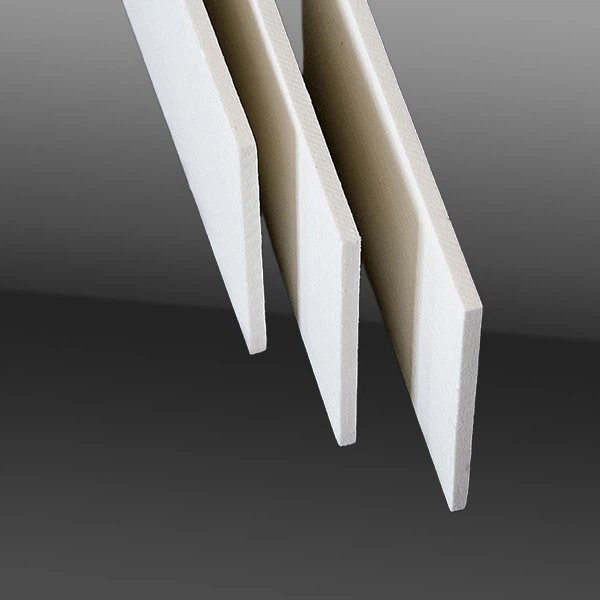
High-temperature rigid ceramic fiber boards feature a dense structure, high mechanical strength, and excellent machinability. They are widely used in various high-temperature industrial furnaces, thermal equipment, and insulation systems, especially in applications requiring strict dimensional stability and mechanical strength of insulation materials.
Product Structure and Manufacturing Process
The main raw materials of ceramic fiber boards include high-purity alumina and aluminum silicate. They are produced using a wet vacuum forming process followed by drying, cutting, and surface finishing to create rigid boards with dense structures and smooth surfaces.
Some products can be enhanced with reinforcing fibers, organic binders, or inorganic additives to further improve performance and application adaptability according to specific requirements.
Main Technical Properties
Service temperature range: 1050°C – 1430°C (depending on grade)
Thermal conductivity: Below 0.12 W/m·K (at 800°C)
Density: 240 – 400 kg/m³
Compressive strength: 0.5 – 1.0 MPa
Linear shrinkage: Less than 4% (at maximum service temperature)
pH value: Neutral or slightly alkaline, environmentally safe
Product Advantages
(1) High-temperature stability
Maintains structural integrity without deformation or powdering under high temperatures.
(2) Excellent thermal insulation performance
Significantly reduces energy loss and improves thermal efficiency of equipment.
(3) High strength and wind erosion resistance
Suitable for high-velocity airflow environments such as hot air duct linings.
(4) Easy to machine
Can be sawed, cut, drilled, and ground to meet various structural designs and installation requirements.
(5) Good chemical stability
Resistant to most acids and alkalis, making it suitable for corrosive atmospheres.
(6) Environmentally friendly and safe
Asbestos-free, non-toxic, and compliant with EU RoHS and REACH environmental standards.
Typical Applications
Industrial furnace linings (such as steel smelting furnaces, heat treatment furnaces, and glass melting furnaces)
High-temperature hot air duct linings
Backup insulation systems for thermal equipment
Furnace doors and covers of heating equipment
Thermal insulation layers for power plant boilers
Fire protection insulation for flue ducts
Fire door core materials and building fire partitions
Installation and Construction Recommendations
Cutting tools:
Standard tools such as toothed saws and angle grinders are recommended.
Installation methods:
Can be installed by bonding, anchoring, slotting, or other suitable methods.
Precautions:
It is recommended to wear protective gloves and masks during installation to avoid dust inhalation. Avoid strong mechanical impacts and prolonged exposure to water during use.
Packaging and Transportation
Ceramic fiber boards are typically packed with cartons, plastic wrapping, and pallets to ensure moisture and compression protection during transportation. Each package includes a product certificate and instructions. Customized packaging labels and stacking methods are also available upon request.
Storage and Usage Recommendations
Store in a dry and well-ventilated area to prevent moisture absorption.
Do not expose to outdoor or high-humidity environments for extended periods.
If stored for more than six months, it is recommended to recheck appearance and dimensions before use.
Technical Services and Custom Solutions
We provide customized ceramic fiber board solutions based on customer requirements such as dimensions, service environment, and special performance needs, including:
Special-shaped structural processing
Multi-layer composite board customization
Binder type and proportion adjustment
Enhanced acid and alkali resistance treatments
We also provide application consulting, installation guidance, and technical training services to support efficient project implementation.
FAQ
Q1: What temperature can ceramic fiber boards withstand?
A1: Depending on the grade, the service temperature ranges from 1050°C to 1430°C. Selection should be based on actual operating conditions.
Q2: What are the advantages compared to traditional insulation materials?
A2: Ceramic fiber boards offer lower thermal conductivity, higher temperature resistance, and better mechanical strength, making them especially suitable for high-temperature and demanding environments.
Q3: Are ceramic fiber boards environmentally friendly?
A3: Yes. The product is asbestos-free and compliant with RoHS and REACH environmental standards. Some grades also use bio-soluble fiber formulations for enhanced safety.
Q4: Can special sizes be provided?
A4: Yes. We can customize length, width, thickness, and shapes according to customer requirements.
Q5: Can the product be used outdoors or in humid environments?
A5: Indoor dry environments are recommended. For humid environments, waterproof treatment or moisture-resistant grades should be selected.
For customization requests or sample inquiries, please contact the SUNTHERM engineering and technical team. We will provide professional solutions and one-stop technical service support.
Hot Tags: high-temperature rigid ceramic fiber board, China high-temperature rigid ceramic fiber board manufacturers, factory
You Might Also Like
Send Inquiry