



Anchored Ceramic Fiber Furnace Lining Module

Anchored Ceramic Fiber Furnace Lining Module suppliers

Anchored Ceramic Fiber Furnace Lining Module factory
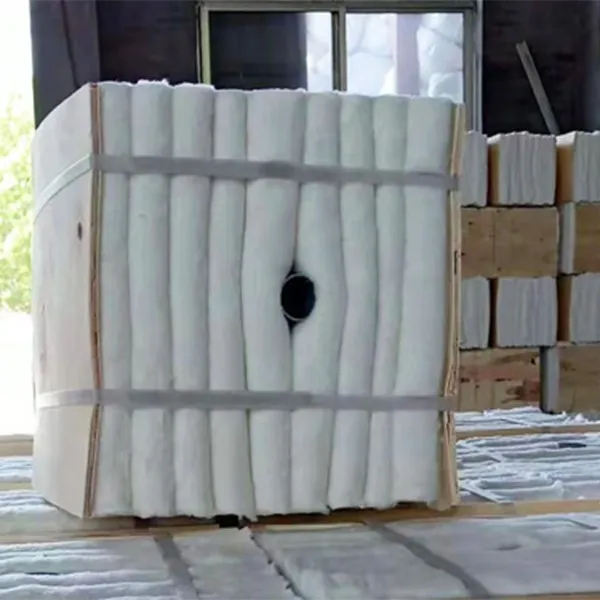
Anchored Ceramic Fiber Furnace Lining Module best
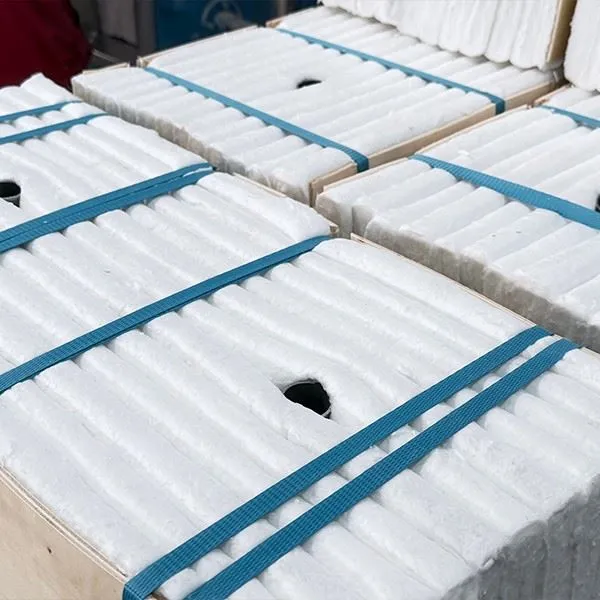
Anchored Ceramic Fiber Furnace Lining Module high quality
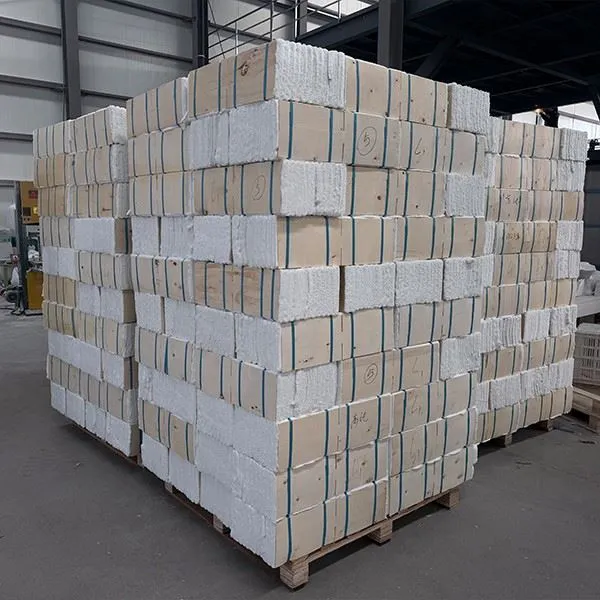
Anchored Ceramic Fiber Furnace Lining Module price
Anchored Ceramic Fiber Furnace Lining Module
This product is made of ceramic fiber blankets through continuous folding or block assembly. High-temperature resistant stainless steel anchors are pre-embedded inside the modules, which can be flexibly arranged according to the furnace shell structure. During installation, the modules are fixed to the inner wall of the furnace shell by the anchors, and the modules are squeezed together by pre-compression elasticity to form a seamless and highly integrated fiber furnace lining.
Technical Indicators and Performance Parameters
|
Item |
Unit |
Typical Data |
|
Maximum continuous operating temperature |
℃ |
1260 - 1600 |
|
Short-term temperature resistance |
℃ |
可达1650 |
|
Thermal conductivity (800℃) |
W/(m·K) |
0.12 - 0.22 |
|
Density |
kg/m³ |
230 - 450 (Customizable) |
|
Compressive strength |
MPa |
≥1.0 |
|
Moisture content |
% |
≤1.5 |
|
Thermal expansion rate (RT~1000℃) |
% |
≤0.5 |
|
Chemical composition |
- |
Al₂O₃,SiO₂为主 |
|
Mechanical strength |
- |
High, suitable for mechanical installation |
|
Fire rating |
- |
Non-combustible |
Production Process Flow
I. Raw Material Selection
High-purity ceramic fiber blankets or fiber paper are selected as the base material. Strict batch control of raw materials ensures uniform fiber structure and stable, reliable performance.
II. Precise Cutting
According to the module design specifications, CNC cutting equipment is used to cut the fiber material into layers, ensuring precise and consistent dimensions for each layer.
III. Layered Stacking
The cut fiber layers are evenly stacked according to design requirements, with environmentally friendly inorganic binders applied uniformly between layers to ensure structural integrity.
IV. Hot Pressing
The stacked blanks are placed into a specialized mold and formed using a computer-controlled hot pressing process. Precise control of pressure, temperature, and time ensures the module achieves the designed density and dimensional accuracy.
V. High-Temperature Curing
The formed module is transferred to a programmable temperature-controlled heat treatment furnace. A stepped heating process completes material curing and crystal phase transformation, significantly improving the module's structural strength and high-temperature stability.
VI. Surface Treatment (As Required)
According to customer application needs, reinforced coating treatment or the installation of a matching metal anchoring system can be applied to further enhance the module's durability and ease of installation. VII. Quality Inspection and Packaging Each batch of modules undergoes multi-dimensional testing, including dimensional tolerance, bulk density, compressive strength, and thermal performance. Qualified products are packaged in moisture-proof and shock-resistant packaging and come with a test report and installation instructions.
Core Product Advantages:
• Low Thermal Conductivity: Thermal conductivity as low as 0.10–0.18 W/(m·K) (average 800℃), significantly reducing heat loss from the furnace wall.
• High Thermal Shock Resistance: Flexible fiber structure, resistant to rapid heating and cooling, without peeling or cracking.
• Low Heat Storage: Heat capacity is only 1/10–1/20 of traditional refractory materials, allowing for rapid heating and cooling, shortening the production cycle.
• Easy Installation: Prefabricated modular design, construction requires no curing, and is 3–5 times faster than castable refractory.
• Good Airtightness: Modules expand and compress against each other, forming a seamless, airtight lining.
• Wind Erosion Resistance: Surface can be coated with a hardener, withstanding wind speeds up to 15–30 m/s (depending on application).
• Reliable Anchoring: Built-in high-temperature resistant anchors ensure a firm connection, preventing module detachment.
Main Application Areas
Anchored ceramic fiber furnace lining modules are suitable for the following industrial kilns:
• Petrochemical industry: tubular heating furnaces, pyrolysis furnaces, conversion furnaces
• Metallurgical industry: heat treatment furnaces, annealing furnaces, forging furnaces, soaking furnaces
• Ceramics and glass: shuttle kilns, roller kilns, glass melting furnace insulation
• Power industry: boiler ignition burners, flue linings
• Environmental protection equipment: waste gas incinerators (RTO/RCO), pyrolysis furnaces
• Others: drying furnaces, enamel firing furnaces, experimental electric furnaces
FAQ
Q1: What are the advantages of anchored modules compared to ordinary ceramic fiber blankets?
A1: Modules are prefabricated compressed components, offering high installation efficiency, excellent lining integrity, no thermal shrinkage gaps, and a reliable anchoring system, making them particularly suitable for large furnaces and high-temperature airflow environments.
Q2: What is the compression ratio of the modules? How is their resilience?
A2: Typically compressed by 30%–50%, the modules expand after installation, squeezing together to form a seamless lining. Excellent resilience compensates for fiber thermal shrinkage.
Q3: What are the anchoring methods for the modules?
A3: Commonly used methods include welding (screws welded to the furnace shell) and bolted connections. Anchor types include M-shaped, V-shaped, and butterfly-shaped, selected based on the furnace shell structure and temperature.
Q4: Does the module surface require special treatment?
A4: Standard modules can generally be used directly. If facing high-speed flue gas erosion (>20 m/s) or chemical corrosion, it is recommended to apply a hardened coating or use a protective layer of facing blocks.
Q5: Can the modules be used in furnaces in contact with flames?
A5: Yes. Using zirconium fiber modules (temperature resistant up to 1400℃) and appropriate surface treatment, they can be directly used as working linings in contact with flames and high-temperature airflows.
Hot Tags: anchored ceramic fiber furnace lining module, China anchored ceramic fiber furnace lining module manufacturers, factory
Previous
No InformationYou Might Also Like
Send Inquiry